
Doggie in Filet
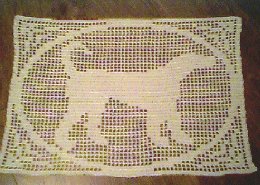
Designed By Julie A. Bolduc
This doily was designed as a direct request. I used a dog image I had in my computer. It takes a little longer than the deer filet but it is well worth the effort. Hope you like it.
Materials Needed:
1 ball Cebelia size 20 Crochet Cotton in White.
Size 10 steel crochet hook
Spray Starch
Iron
Pressing Cloth like a pillow case
Tapestry needle
Thread Thickness: 20thread
Gauge: 9sc=1"
Finished Size: =14"x10"
Skill Level: Intermediate
Instructions
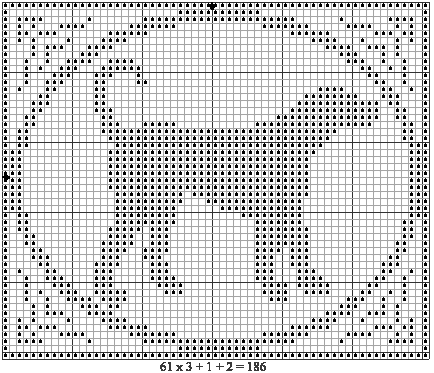
ROW 1: Ch 186, dc in 4th ch from hook and in each ch across. Ch5, turn.
ROW 2: Starting on left side of chart, follow the chart working dc in next dc, ch2, sk 2 dc, dc in next dc for each sp and 1dc in each of the next 4 dc for each filled block.
Follow chart from left to right for all even numbered rows and from right to left for all odd numbered rows.
At the end of the last row. Fasten off and weave ends into back of work. You may want to put an edging around it. I didn't.
Starch as needed.
Design written on Monday, January 11, 1999. Copyright ©1999 By Julie A. Bolduc p123006
All items in our online shop ship free within the US only. I currently offer U.S. shipping only and it is from rural Maine. Delivery can vary from 2–14 days depending on your distance from Maine. Expedited shipping is not available.
Please note: I am now selling all of my paper bead making tools and other items from this web site using Paypal payments.
I have removed all of my paper bead making tools from Amazon. My Kindle crochet pattern books and paper template paperback books continue to be available on Amazon, as they are printed and fulfilled directly by Amazon. If you would like to shop my Etsy Store, follow the link in the header above.
Random Quick Tip!
Marking A SpotIf you need to mark a special spot on a project but you don't want to write on it, scratch it or something else that can do damage, use a small piece of painter's tape on the spot, then draw a line on that piece of tape exactly where you want the mark to be. The tape is safe for all surfaces and can be easily removed, when done, without leaving a residue.